
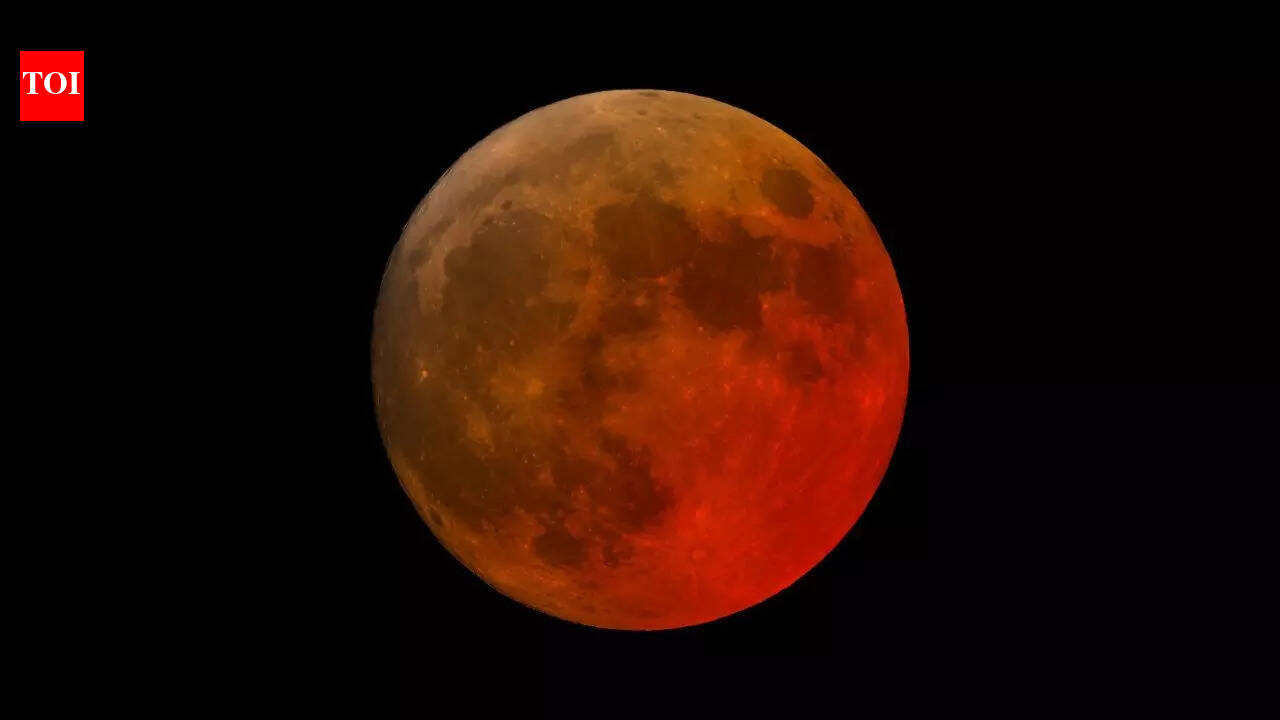

Tomorrow, a spectacular event in the sky will happen that will amaze skywatchers all over the world. PTI News says that there will be a total lunar eclipse, which is the last chance to see this kind of event until 2029. When the Earth is in the way of the Sun and the Moon during a total lunar eclipse, it casts a shadow that slowly moves across the surface of the Moon. This eclipse is special because it will be visible from many continents, letting millions of people see the Moon turn red, which is often called a “blood moon.” People who love astronomy and people who just like to look up are both encouraged to do so, because this rare event is both beautiful and interesting from a scientific point of view.
What is a total lunar eclipse
The Moon is completely in the Earth’s shadow during a total lunar eclipse. A lunar eclipse can be seen at night, while a solar eclipse can only be seen during the day. You don’t need to wear special glasses to see a lunar eclipse. As the Moon moves through the Earth’s umbra, which is the darkest part of the shadow, it slowly gets darker and eventually turns red. Sunlight bends through the Earth’s atmosphere, letting red light shine on the Moon and blocking shorter blue wavelengths. This is what causes this effect. According to PTI, this natural event is predictable and has fascinated people for hundreds of years, leading to myths, stories, and scientific research.
When and where to watch the total lunar eclipse
A total lunar eclipse will happen tomorrow. People in Asia, Australia, Africa, Europe, and the Americas will be able to see it, but the exact time will depend on where you are. PTI reports that skywatchers should check local astronomical charts to find the best viewing times in their region. In India, the eclipse is expected to begin in the late evening, with totality when the Moon is fully in Earth’s shadow lasting for about 40 to 50 minutes. Observers in cities with clear skies and minimal light pollution will have the best experience. Unlike solar eclipses, a lunar eclipse can safely be observed with the naked eye, binoculars, or a telescope for a closer look.
Why is this the last total lunar eclipse until 2029
Astronomical calculations say that after tomorrow, there won’t be any total lunar eclipses visible from many places until 2029. This is due to the precise alignment required between the Sun, Earth, and Moon, which does not happen frequently. According to PTI, while partial and penumbral eclipses will still occur, total eclipses like this are much rarer. The long gap makes tomorrow’s event particularly important for enthusiasts, educators, and students who study astronomy. People who miss it may have to wait almost three more years to see something like it in full totality again.
Tips for enjoying the lunar eclipse
Watching a lunar eclipse can be both fun and educational. Here are some simple tips to make the most of the experience:
- Look for a clear, open sky: Don’t go near tall buildings, trees, or mountains that might block your view.
- You don’t have to use binoculars or a telescope, but they can help you see craters and other details on the surface.
- Take photos with proper settings: If you’re using a camera, change the settings for long exposures to get the red glow.
- Look at the time: Local astronomical charts show the exact times when the eclipse will start, peak, and end.
- Have fun with friends or family: Sharing the experience makes it more memorable and helpful.
The science behind the “blood moon”
Rayleigh scattering is what makes the moon look red during a total lunar eclipse. The atmosphere of the Earth bends sunlight toward the Moon. The shorter blue wavelengths are scattered in all directions, but the longer red wavelengths go through and light up the Moon. Reports says that this effect is similar to what makes the sun rise and set red. The red can be brighter or darker, and the colour can change depending on things like volcanic activity, dust in the air, or the weather. This makes each eclipse look a little different.
Why people are excited about tomorrow’s celestial event
Total lunar eclipses combine natural beauty with scientific interest. They provide opportunities for learning, photography, and simple stargazing. According to reports, educators and astronomy clubs often organise viewing events, public lectures, and online live streams to help people understand the phenomenon. This particular eclipse is drawing extra attention because it is the last total lunar eclipse until 2029, making it a once-in-a-decade chance for enthusiasts to experience a “blood moon” in full glory.