

Want to bookmark your favourite articles and stories to read or reference later? Start your Independent Membership today.
Already a member?
Log in
It’s hard to pinpoint when it happened – the exact moment when the England flag went from being a benign show of patriotism to a dog-whistle call to racism.
At one point, the St George’s flag was even considered the “safe”, more inclusive alternative to the union jack, the latter having been co-opted by the National Front in the late 1970s. Football was arguably the driving force behind this: in a 2019 speech, former Labour leader Ed Miliband said: “Since Euro ’96, English football fans have helped to reclaim the flag of St George from the BNP.”
Sociologists Paul Bagguley and Yasmin Hussain, meanwhile, described in their 2005 essay, “Flying the Flag for England? Citizenship, Religion and Cultural Identity among British Pakistani Muslims”, how St George’s flags were displayed from the windows, shops and taxis of Bradford’s British Pakistani population during the 2002 World Cup. “The St George’s flag was felt to represent a multi-ethnic Britain, whereas the union jack is associated with colonialism and white racism,” they wrote.
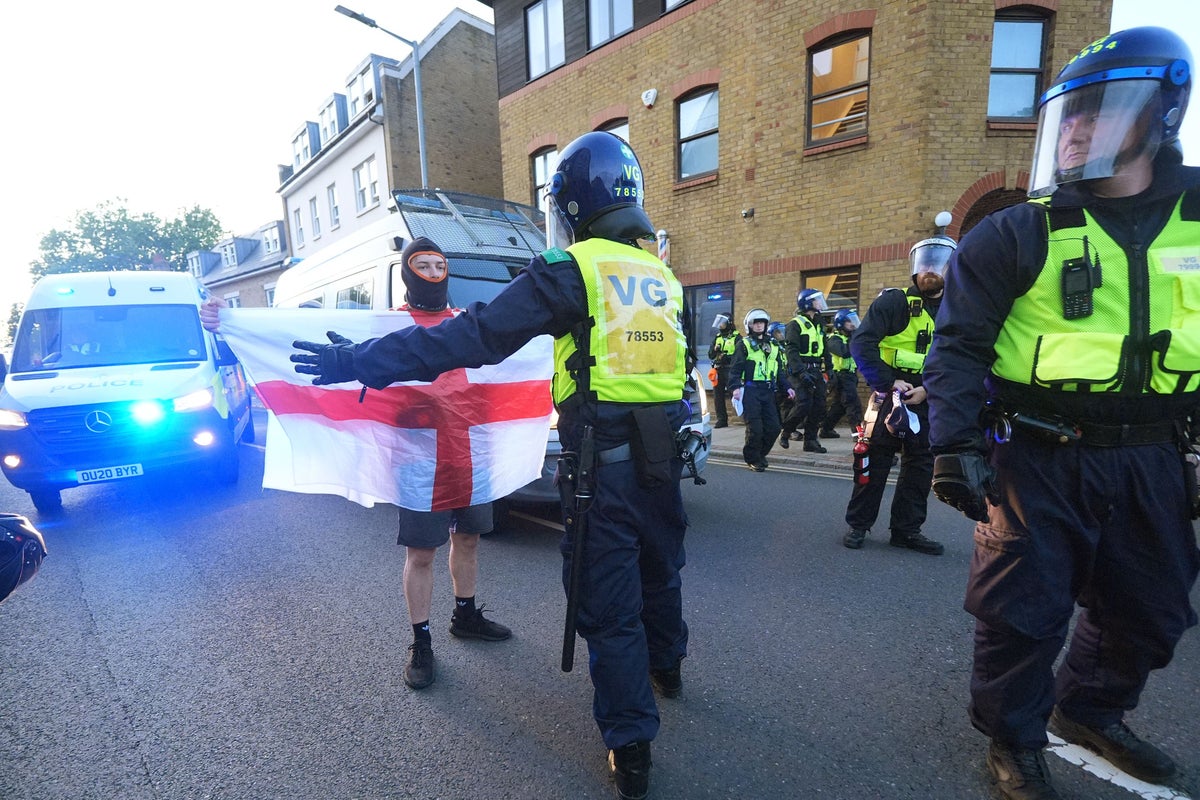
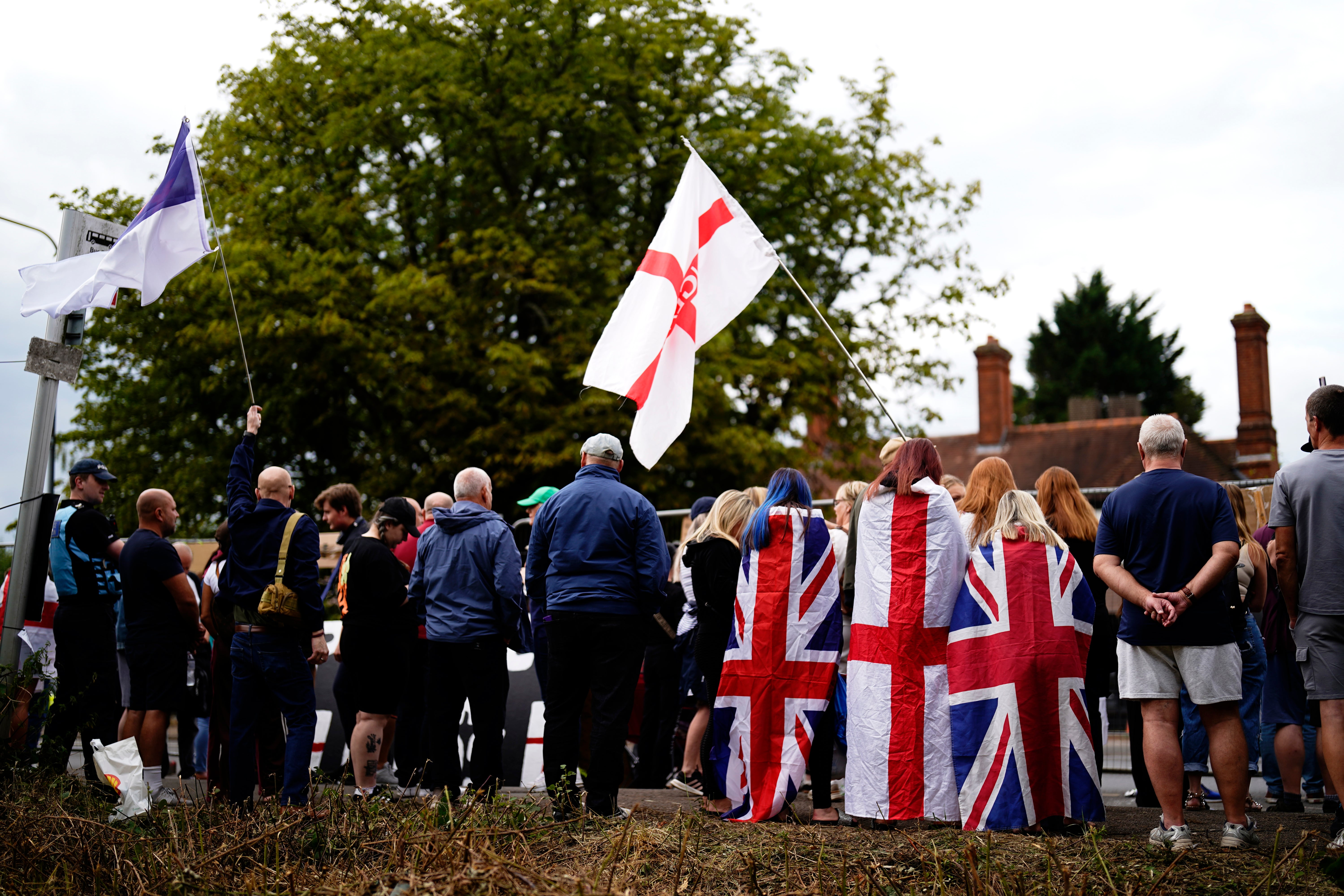
But somewhere between Labour MP Emily Thornbury’s infamous 2014 tweet, Brexit, a run of anti-immigration PMs and the swift rise of the Reform party, something shifted in the national consciousness. It’s no coincidence that, in many of the anti-asylum hotel protests of the past few years, the St George’s flag features prominently. Recent anti-immigration “stop the boats” protests in Dover and Portsmouth have also seen the flag taking centre stage.
It might not seem fair that to fly our country’s flag is tantamount to throwing your lot in with the far right, yet the connotations are now hardwired – so much so that councils across the West of England are considering imposing new rules that would mean people caught putting flags on public lamp-posts and railings could face prison or fines. Bristol City Council is currently weighing up whether to follow Oxfordshire County Council’s lead in obtaining a High Court injunction prohibiting flags on public furniture, after reportedly spending about £50,000 on removing flags across the city.
The controversy all kicked off last summer, when a Worcestershire community group launched a fundraiser to put England flags on every lamp post in their village.
The Wythall Flaggers fundraising page mustered thousands of pounds in pledges, to be used to cover “the local community in England flags as this is home and we should be patriotic and proud … We need help to cover every street in Wythall with our beautiful St George’s cross”. It quickly drew censure and accusations of right-wing sympathies.
However, the campaign, read the page, “is NOT racist never has been never will be”. The group claimed to “have members of the community of all ethnicities and religions stopping by and praising what we are doing so please don’t call this racist”.
And indeed, as Bridget Byrne, a professor of sociology at the University of Manchester and the director of the Centre on the Dynamics of Ethnicity, puts it: “A flag doesn’t hold any inherent meaning – it’s about why you put it up and what’s behind it.” But, clearly, waving a flag at a football match for the England team is very different to putting flags up en masse around the country.
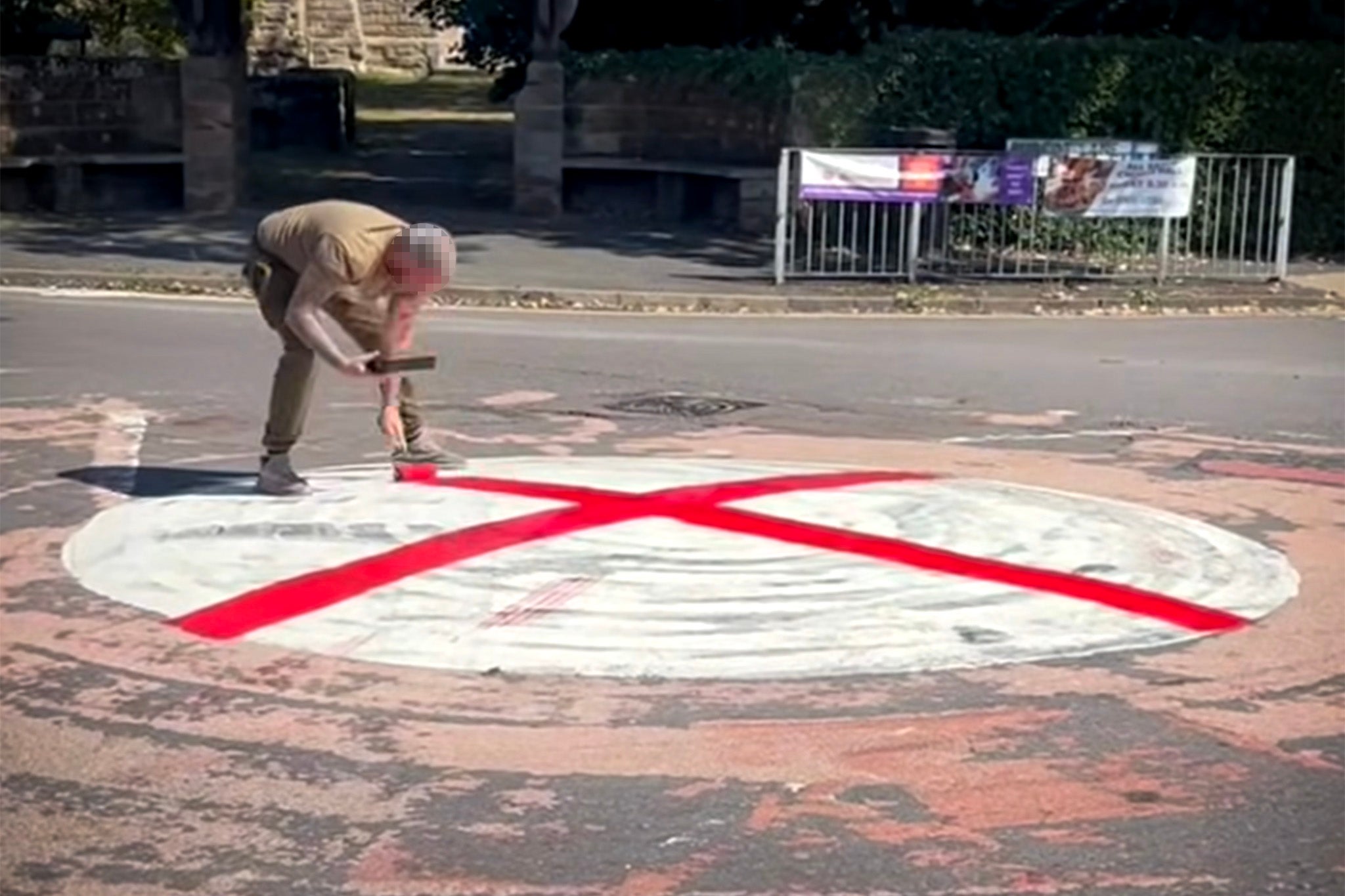
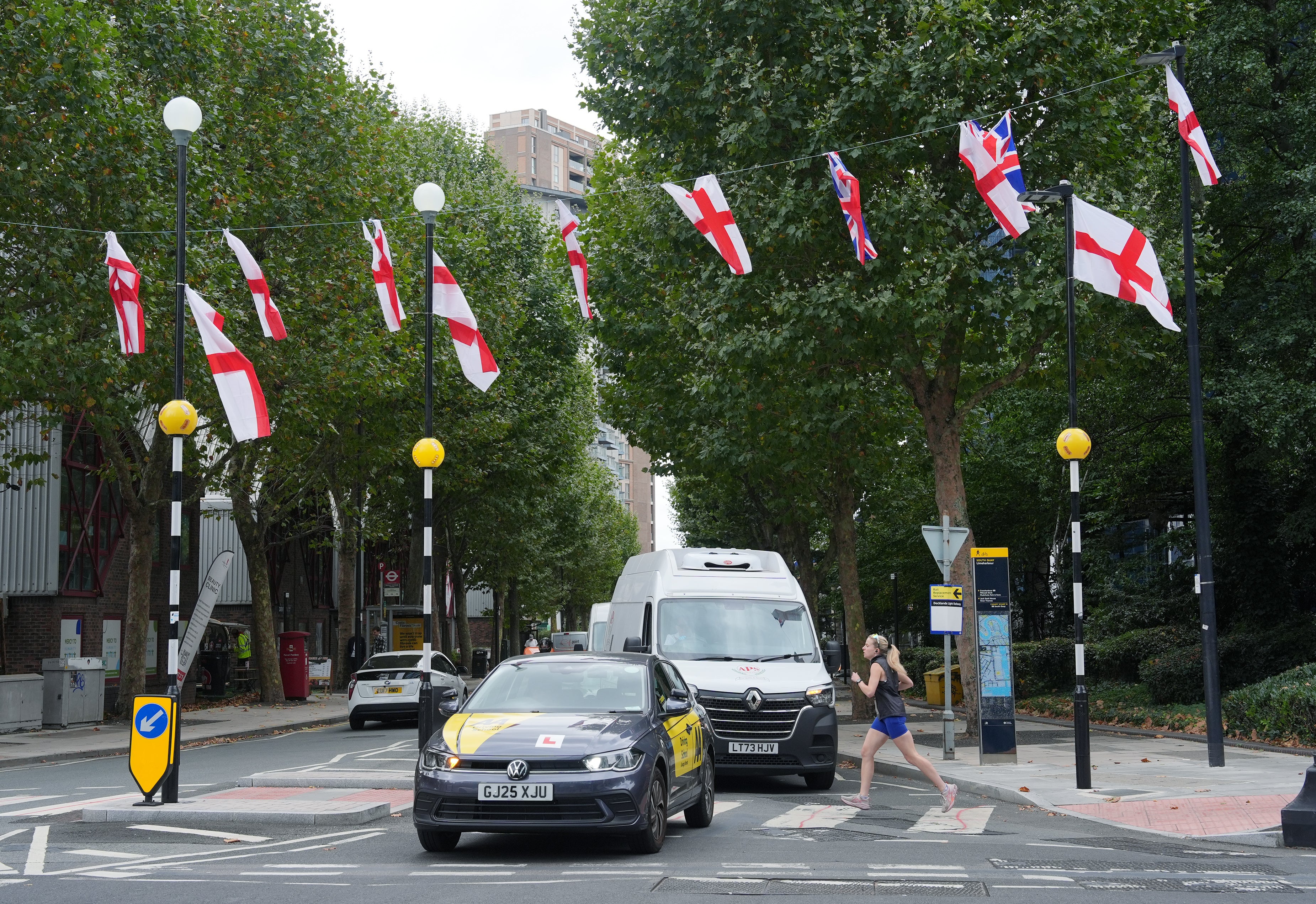
Perhaps if this enthusiastic show of national pride had been an isolated incident, it would have been easier to see it as such. But the Wythall Flaggers were just the beginning; soon after, Manchester Road in Tower Hamlets, east London, was lined with St George’s flags, while residents in Weoley Castle and Northfield, near Birmingham, did likewise. At least six mini-roundabouts in the Birmingham area were painted white with red crosses, while flags started to be seen tied to lampposts across the country. Councils were forced to remove the majority, citing health and safety.
What’s wrong with a few flags, you might think? In one of those strange coincidences that life throws up, as I was literally writing this article I overheard a woman on the train talking about the story. “Who cares if they put them up?” she said in exasperation to her friend. “Get a life!”
The thing is, however much these groups might have claimed to want to separate flag from politics, the support they attracted painted a very different picture. The mass flag hanging was thought to be part of “Operation Raise the Colours”, an online movement encouraged by none other than Britain’s own face of the far right, Tommy Robinson, alongside far-right group Britain First.
In this instance, flying the flag appears to point to a “racialised notion of what England is – it’s about distinguishing ‘Englishness’, an imagined ethnically white identity of Englishness, which doesn’t include multiculturalism,” says Byrne.
Nobody who has a proper understanding of what it’s used for would pretend otherwise; it’s a clear symbol of racism
Kehinde Andrews, Black studies professor
The campaign also received backing from Reform UK, who now have control of 23 local authorities. Last year they pledged that they would not take down union or St George flags, calling them “symbols of unity and inclusion”, and have also described troubling plans to increase the flag’s prominence by banning “local authorities from flying any flags aside from the union jack or the St George’s Cross in councils they control”.
And yet it is very hard to make the case that the England flag represents inclusion. “No,” is Birmingham City University’s Black studies professor’s simple answer when asked whether it’s possible to separate patriotism from racism with regards to the St George’s flag. “Nobody who has a proper understanding of what it’s used for and what it means would pretend otherwise,” says Kehinde Andrews, who has authored the book The New Age of Empire: How Racism and Colonialism still Rule the World. “It’s a clear symbol of racism.”
In a 2024 YouGov survey, more than a quarter (27 per cent) of Britons said they had an unfavourable opinion of people flying the England flag outside their home. But attitudes varied wildly according to political leanings: 44 per cent of those who voted Labour in 2019 had a negative view of those who flew the England flag – higher than the 37 per cent who had a favourable view – while only 10 per cent of Tory voters viewed it negatively compared to a whopping 81 per cent who felt positively about it. You cannot separate the two: politics and flag-waving go hand in glove.
Andrews believes the flag started to be used as a symbol of racism in recent history, during the Fifties and Sixties, at the point when more brown and Black people started arriving into the country. This included the Windrush generation – around half a million people emigrated to the UK from the Caribbean after being invited to move here by the British government to help fill labour shortages after the Second World War. “The thing about the UK is, because slavery happened elsewhere, not like in the US, it’s only when we were here in bigger numbers that we started to get the rise of the far right and see the embrace of the flag in that way,” says Andrews. “It represents that Britishness, Englishness, is white – it’s no accident that those are the same flags that would have been used on slave ships, and by colonisers.”
This idea of England being the historical oppressor, imposing its power across the globe and expanding the Empire, perhaps helps explain why the other British nations’ flags – Wales and Scotland, for example – do not have the same inherently racist connotations. Those countries have had their own chequered history with England as the oppressor, and it is still seen by some as the common “enemy” to rally against.
“The way in which nationalism works in those countries often centres around independence,” says Byrne, referencing the 2014 Scottish independence referendum. “A broader range of people identify themselves with that movement – it’s not necessarily a racialised nationalism but a political nationalism.”
Amid all this, there are small, hopeful signs that the England flag is being intentionally reclaimed by the next generation (minus the far-right implications). A surge in Gen Z using the St George’s flag emoji, somewhat ironically, has been observed on TikTok. Young musicians “are increasingly reclaiming the aesthetics of Cool Britannia and Britpop”, as noted by The Independent’s Ellie Muir. Black indie singer/songwriter Rachel Chinouriri has most notably gone down this route, with cover art for her 2024 album, What a Devastating Turn of Events, featuring a council house adorned with St George’s flag bunting.
For anyone who has been in Britain for the last 40 years, it always raises a question
Bridget Byrne, sociology professor
“I said to my label, I don’t want to use the union jack, let’s go full-on England,” said Chinouriri. “For Black people and POC, that flag’s not something people are necessarily proud of. [The album imagery is me saying] I’m proud of being English because I am English, you can’t confiscate my passport – you can try but you won’t be able to.”
But, in most contexts, that red cross on a white background remains inexplicably bound up with an idea of England that is inherently exclusionary. “For anyone who has been in Britain for the last 40 years, it always raises a question – particularly for those who’ve suffered racist abuse at the hands of the people waving those flags,” says Byrne.
Andrews puts it even more starkly. “It’s a symbol of the right because it’s a symbol of racism,” he says. “If you genuinely wanted something to represent an inclusive, anti-racist Britain, you’d make a new flag.”