
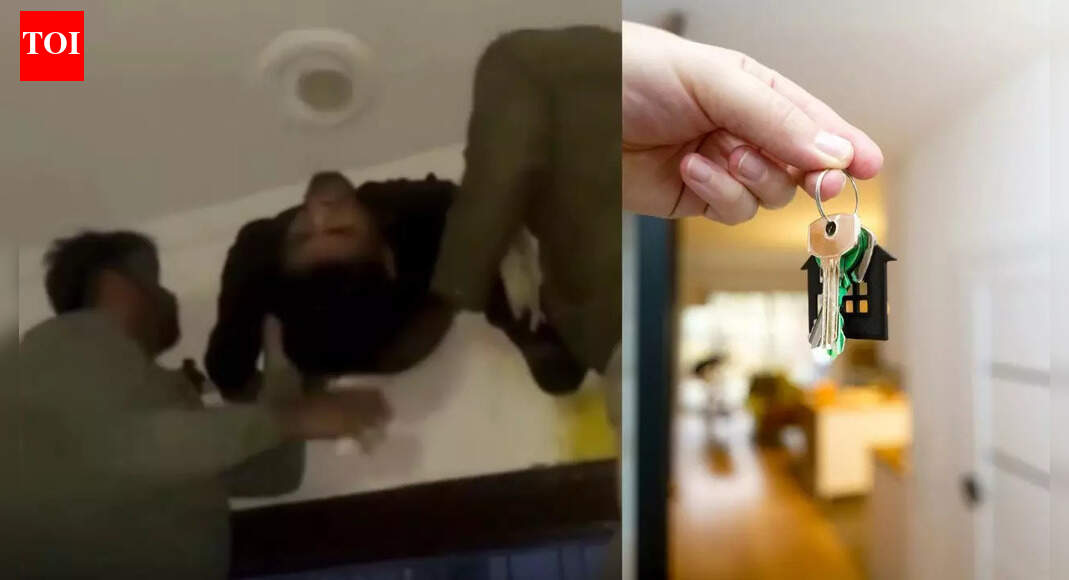

In a bizarre incident in Kota, Rajasthan, a thief who tried to break into a house got stuck in the shaft of the kitchen exhaust fan for about an hour. The house owner, Subhash Kumar Rawat, left on a tour to Khatushyamji on January 3, 2019, while his wife returned home the next day at about 1 am. To her shock, part of the intruder’s body was hanging from the kitchen fan shaft; therefore, he was helpless. Police took him safely out and into custody. The video went viral since the rescue, showing both the brazenness of criminals and how break-ins come along with unexpected risks.
Kota theft shows how burglars used exhaust fan shafts to enter homes
As per Instagram post, the man had plans to break into the house when it was not occupied, as confirmed by the police reports. However, one of his accomplices was said to have run away upon noticing the chaos. In this bizarre burglary attempt, using the exhaust fan shaft, it is obvious that burglars often take advantage of small gaps in homes that are easily overlooked to gain entrance into a house. Even the most unlikely places in a house, like small windows or ducts, can form potential security hazards even if they are not normally checked.This incident, although rare, highlights the volatility of attempts made by offenders. The offenders could resort to novel and unconventional breaking methods, mostly when houses seem empty and are not closely monitored. The incident involving the Kota family serves as a reminder to the community.
How to protect your home from unusual break-ins
Even such an odd incident as the one described is a reminder that home security means being able to rely on both traditional and unorthodox methods. The following tips have been suggested by specialists in the area:Ensure unconventional entry points are secure
- Kitchen exhaust fans, vents, and skylights should be reinforced with metal grilles or covers.
- Look for any openings around the edges of open doors, windows, and also around any air
Install motion-activated lights
- Lights should be placed around entrance areas and side alleys.
- The motion sensors will alert the homeowners in case their house is being entered by either human beings or animals.
Use surveillance cameras
- Cameras should cover all access points, including unusual angles like vents or narrow side entrances.
- Recording suspicious activity helps police in investigations.
Community vigilance
- Inform neighbours about travel plans to maintain informal surveillance.
- Participate in or organise a local neighbourhood watch program.
Emergency preparedness
- Keep contact numbers for local police and security services readily accessible.
- Have a clear action plan for residents in case of break-ins or emergencies.
Secure valuables
- Store valuables in safes or hidden compartments.
- Avoid keeping expensive items near windows or easily accessible areas.
Key safety tips
- Make it a habit to inspect your dwelling for vulnerable or unsecured entry points.
- Emphasise both normal and uncommon moves.
- Use technology such as CCTV cameras and motion lights.
- Stay in touch with neighbours and community security networks.
- Have emergency contact information handy. Have a safety plan.
- Teach the family members how to handle the situation if it is a break-in attempt.