

The nighttime lights of Las Vegas can hide the stars, but sometimes you can still find them under one dazzling roof.
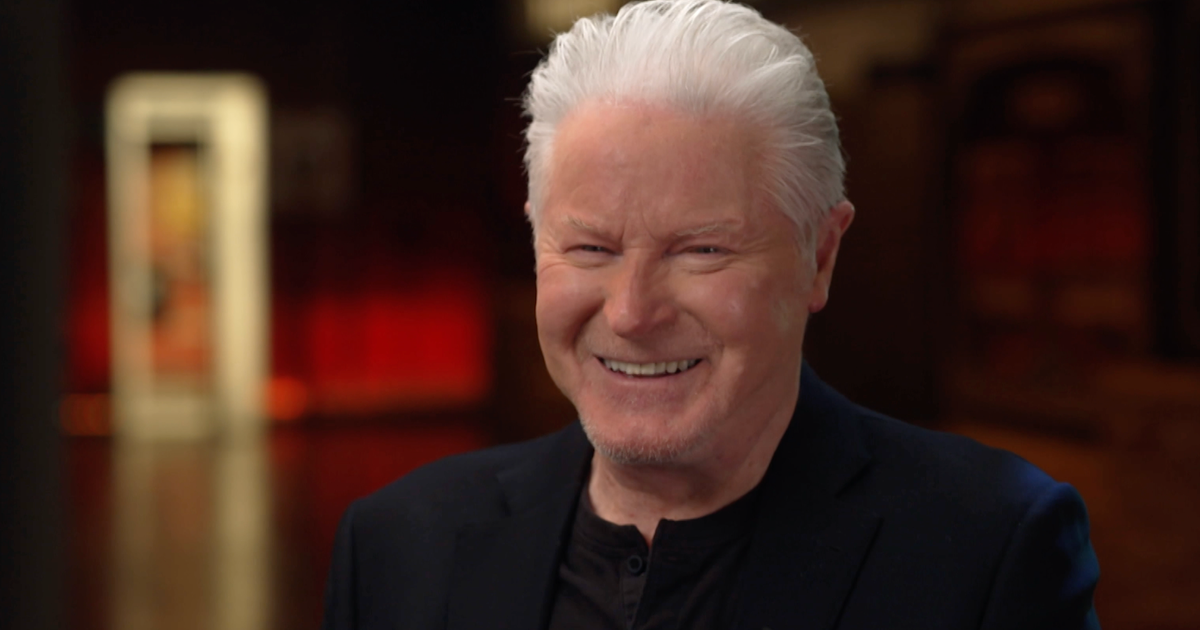
One of the greatest bands on Earth — the Eagles — are in residence at the state-of-the-art Las Vegas Sphere, led by the band’s co-founder Don Henley, along with longtime guitarist Joe Walsh and country star Vince Gill.
And whenever the Eagles perform here, they sell the place out.
The Eagles’ “miraculous run”
“I guess we’re kind of a staple,” Henley said. “Our first record came out in ’72. Fifty-three years of playing for people. So it’s… you know, it’s been a miraculous run.”
And it got even more miraculous last month, when one of those Eagles albums from the 1970s — “Their Greatest Hits (1971–1975)” — was certified quadruple diamond, the first to sell more than 40 million copies, cementing its place as the best-selling album of all time.
“‘Greatest Hits’ is kind of a misnomer. It should just be called their best songs because every song on that album was not a great hit. You know? There are a couple of songs on that album that didn’t break the top 30. But they’re good songs. Desperado, for example, was never released as a single. Not by us, nor by Linda Ronstadt,” Henley said.
Henley adds that the album wasn’t really their idea; it was basically pushed on them by the record company. But the band “didn’t have any way to stop them,” Henley joked.
“We complained. Oh, yeah. It’s documented,” he laughed.
Legacy of late bandmate Glenn Frey
Henley said writing Desperado with his late bandmate Glenn Frey was the first time the pair collaborated as songwriting partners. He added that they clicked instantly, and Frey quickly earned the nickname “the lone arranger.”
“Because he was so good at arranging songs,” Henley explained.
Frey died 10 years ago at age 67, but his legacy is larger than life.
Before the show, fans can take a literal walk down memory lane at a place called the Eagles’ Third Encore — an almost life-sized model of the key places in the band’s history, including a mock-up of L.A.’s Troubadour nightclub, which includes a real working bar.
But Henley’s pre-show routine isn’t quite the same as it used to be. Instead of taking a shot of tequila, he’s doing crunches as a warm-up.
“I don’t do voice exercises because they don’t help. I sing from my core, so keeping my abdomen in shape makes me sing better,” he said, adding with a laugh, “I don’t have a six-pack or anything, but there’s one under there somewhere.”
Deacon Frey fills in for his late father
One of the emotional highlights of the show is the moment where Frey’s son, Deacon, takes the stage in his father’s spot, often with his father’s guitar, and sings his father’s songs.
“I burst with pride. I almost got tears in my eyes the other night when he was filling in for Joe,” Henley said.
Henley said he wasn’t sure performing without Frey was feasible, but the band agreed to continue only if Deacon could join them.
A father of three himself, Henley has always had a rich life outside the band, and he recently co-produced a PBS documentary with filmmaker Ken Burns about Henry David Thoreau.
“There are so many parallels to what he was seeing during his time and what we’re seeing now. As Mark Twain said, ‘History doesn’t repeat itself, but it often rhymes.’ And I think that’s what’s happening now,” Henley said.
What’s next?
The Eagles are keeping the music alive with a few more live shows this summer and an extended run in Las Vegas into April, featuring cutting-edge technology that didn’t exist when they first started making music.
“The sound system is like nothing on the planet. There are about 167,000 speakers in that dome,” Henley said of the Sphere.
The Eagles’ tour is called “The Long Goodbye,” but Henley says this time he means it.
“You know, I think this year will probably be it. I’ve said things like that before, but I feel like we’re getting toward the end. And that will be fine, too,” Henley said.
After more than 50 years of playing, Henley says he has to psych himself up to perform the Eagles’ classics each night.
“After a while, you learn to make friends with the songs,” he says. “It’s not about us. It’s about what they mean to the people we’re playing them for. You have to play every night with your heart in it.” Henley adds, “Music is medicine. And people need some medicine right now.”